In Search of Hau: A Mystery Unrevealed?

Mrityunjay Barman & Anuj Choudhury

The Hau (Mask)

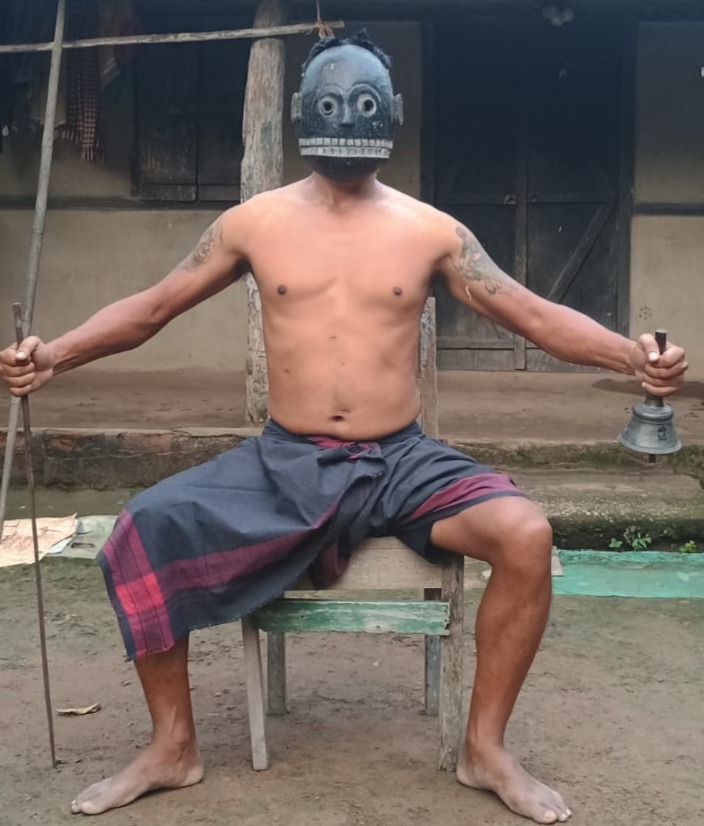
You might have frequently come across the term ‘Hau’ or have frightened a kid saying, “Don’t go there; Hau will come.” The word Hau is often uttered by Koch parents or elders to horrify and control their kids’ behaviour. But have you wondered what exactly is ‘Hau’? Is Hau a ghost, a monster, or an animal? In fact, no one knows exactly of its origin and how the term came into use. The term Hau has been loosely used to scare children and has been passed down from generation to generation as oral history. Like in the Indian state of Assam, in Meghalaya too the Hau is very popular. In Meghalaya the Hua is a human with a wooden black mask with a movable jaw, which comes along with a bell and a sword. These items have been preserved for generations by Sri.Kularajan Barman’s family of Lotibari village, Goalpara, Assam, who later shifted to Tikirkilla, 5 km from Lotibari village. Barman’s family currently resides in Tikirkilla,  West Garo Hills, Meghalaya. But interestingly, the family traces its ancestral roots to Purnia region in Bihar from where two brothers Ram and Beer migrated eastwards. Sri. Kularajan Barman claims to be the 10th generation of Ram. As per oral historical narratives of the family, the head of the family used to wear this mask during battles, and later the same was used while going for hunting. The mask comes with a set of a bell called dalaghata, similar to a bell which is tied around cow’s neck and a sword (unfortunately, Barman’s ancestral family had sold it). While hunting, the bell was used to make different rhythm to attract a deer or tiger. The hunter would secretly hide behind the bush and suddenly appear in front of the prey, shocking the animal and quickly stun the prey with his sword. Since such hunting practises have been given up at present, usage of the mask along with its accessories—the sword and the bell has also stopped. Today, the fearful mask lies now as an heirloom in Barman’s house passed down for generations. However, its name Hau stands immortal among the Koch community and is still used today to scare the hell out of naughty kids!

Mritunjay Barman wearing the Hau
Sri Kularajan Barman along with his extended family members holding the Hau

Conflicted Identity: being Rajbanshi from North Bengal Today

By Utsha Sinha

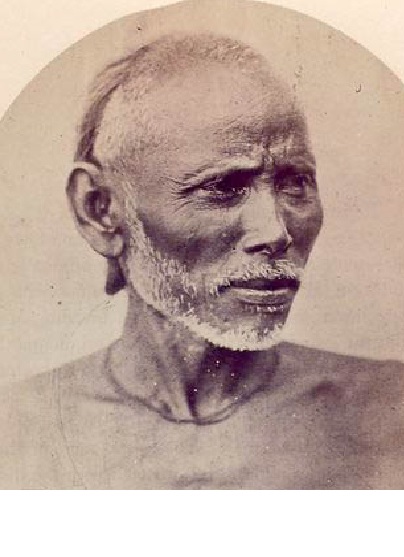
Rajbansi according to The People of India from The New York Public Library

“ওর নাক কি আর উচু হবে না?” (“Will his/her nose not have a higher nose bridge?”)

These are some of the things I’ve personally had to hear growing up. Being Rajbanshi has always been a conflicted identity. Some members of my family proudly boast about their identity. On the contrary, others are more discrete, even finding it humorous when I speak of my academic interest in exploring this area of study. This is a general reflection of the varied representation among the members of the community. But why? It is a question that has always bothered me. Why is my identity not as celebrated as others? This question is multifaceted.

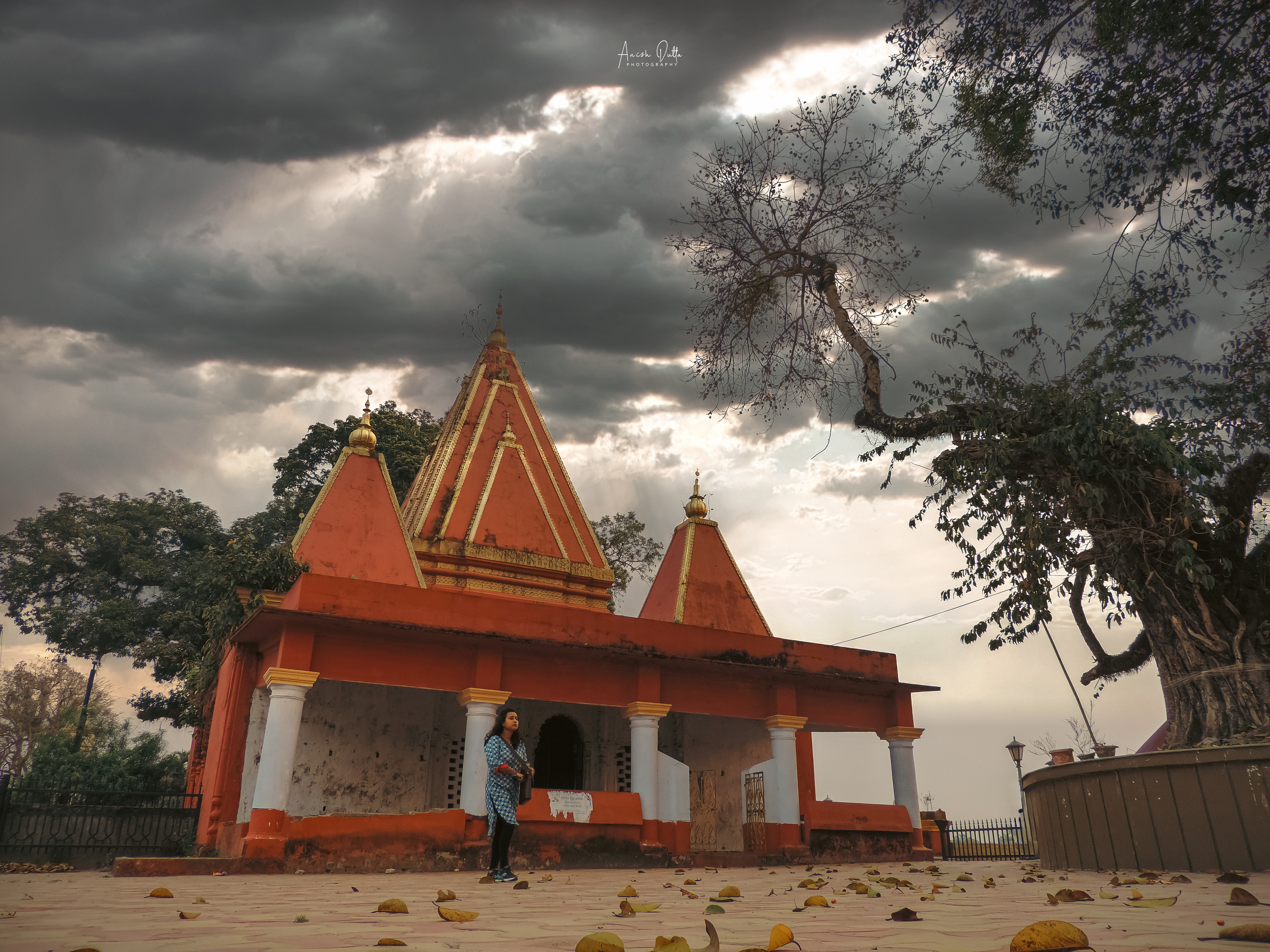
Jalpaiguri Rajbari Shiv Mandir

There exists a myriad of internalized complexity at work; let’s try to understand their roots from a historical perspective. After the Revolt of 1857, the Sepoy Rebellion, as labeled by Indian historians and called the Great Mutiny by British imperialist historians, [1] the British displayed their anxieties and launched the Peel Commission in 1859, largely altering the ratio of European soldiers to Indian soldiers. This further led to the development of the ‘Martial Race Theory’, which shaped the recruitment policies in the army, resulting in a frenzy of ethnographic anthropological documentation projects. Sir Herbert Hope Risley, a British colonial administrator, and ethnographer was the core advocate of anthropometry, the most favoured criterion, which measures the size of the nose and the skull to determine whether an ethnicity or a caste of people is a martial or non-martial race.

“এত মোটা করে ইয়েলিনের লাগাস না, চোখ গুলো আরো ছোট হয়ে যাবে।“ ( “Don’t wear your eyeliner so thick, it will make your eyes even smaller.”) “ওর নাকটা কি বোচা ই থাকবে?” (“Will her nose remain flat?”)

However, this theory was completely flawed, as the criteria for who qualified as a martial race were inconsistent and Machiavellian in nature as per the needs of the Colonial Masters. The Rajbanshi community was no stranger to this categorization. Risley in his book ‘The People of India’ writes:  “The seriations of the Kochh deserve special notice for the indications which they give of the two elements that have combined to form the Mongolo-Dravidian type.”; “Take the Kochh in Dinajpur and Rangpur, and they strike you as in the main Dravidian; travel further east, and include in your survey the cognate Kachari of Assam, and there is no mistaking the fact that Mongoloid characteristics predominate.” [2]

The more Aryan features one resembled, the higher the status of their caste and the more sophisticated was their culture, proximate to that of the British but, in actuality, never the same in any sense. As Homi K. Bhabha puts it, being White “but not quite.” [3]  This desire to be more like the British and subsequent recognition in the guise of martial race with all its anthropometrical justifications have left behind a legacy of racial complexities deeply internalized within Indians.

Caste-‘ism’ is like a disease which has infected Indian society. One still has to live with its realities. Panchanan Barma was one of the most important Rajbanshi leaders of the first half of the twentieth century. It was under his leadership that the community got representation as peasant Kshatriyas in the All-Bengal Depressed Classes Conference. Male members of the Rajbanshi community started imitating rituals often reserved for the Brahmin higher castes, such as wearing a sacred thread.[4]   This transition was not a new phenomenon; adapting to higher caste status and traditions has been observed since the Vedic Period, known as ‘Sanskritization’ as coined by historian M.N. Srinivas.[5] The main objectives of the Rajbanshi community were to improve their social status and political representation.

Despite this constructed caste status, on ground reality, they were still considered to be of inferior social status, treated as untouchables, and even experienced prohibition from entering certain temples. As per the 1931 Census, the community’s literacy rate was a mere 5.8 percent, eventually bringing them under the protection of the list of Scheduled Castes in Bengal in 1933.[6] Although situations have improved since then, one cannot really escape the generational stigmas. There’s still a degree of reluctance observed in resembling any Mongolo-Dravidian features of our ancestors. By consciously choosing to consciously dissociate, individuals tend to distance themselves from the very stigmas and discriminations associated with it. Moreover, it’s the lack of popular representation among the younger people of the community. While many successful Rajbanshi individuals excel in their respective fields, how many can you name who proudly talk about their ethnic identity?  

It is not just the lack of representation but also the lack of resources online. A handful of websites and organizations exist, most are small-scale with no vibrancy in the issues discussed and might have no appeal as such in attracting non-academics. A website titled ‘United States of Kamatapur’ mentions how “Koch Rajbongshis are shy by nature; they do not disclose their ancient language in public….”; “This behavior of Koch Rajbongshi tribe is because of their shyness, but it also has a negative effect because the world is unknown about their language and tribal culture….”.[7] These statements are just depictions of simplistic expositions of issues that require serious scholarly exploration. In my opinion, it’s rather a combination of the factors I have mentioned above that have led to the long-lasting colonization of the mind, leaving most people in denial of their roots.

 To my surprise, only a few research papers exist in the English language on issues related to the Rajbanshis. Only 18 PhD theses are available in all languages combined, [8]  along with a few books and articles that studied the community from the various angles of socio-cultural issues across its vast histories. Very recently, I had the opportunity to visit the Cooch Behar Rajbari. It was magnificent in all its glory, but as a student of history, it led to some queries. ASI has done an excellent job at its conservation efforts, but why were only 4-5 rooms opened to the public with inadequate historical information guides? It felt like visiting any other tourist destination which has lost its historic significance. Even the displayed artifacts were a mere few of the vast selection of treasures of the Rajas. Jalpaiguri is another district with a large number of Rajbanshi inhabitants. It used to be the centre for the Raikats, a sub-branch of the Koch Dynasty.[9] Today, however, the Rajbari has lost its former glory, only visited by its members during Durga Puja. The Rajbari Kali Mandir remains dilapidated with few interested in its historical significance.

Young individuals today spend hours on social media platforms discovering relatable content that reflects the nuances of their cultural background and finding others from their kin. But as a Rajbanshi, who do you identify with? Are you part of the Northeast Indian communities, who resemble you in your physical features, or do you relate to the Bengali people, with whom you share your language and customs to a great extent? Who exactly are you? – A part of both but at the same time not quite either. Identity is complex and, as such, cannot be explained by simple categorization (another problematic legacy of the Victorians) into static definitions. Against all these questions, one might ask my motive behind prioritizing the question of identity repetitively. It is a very simple longing for a sense of belonging. Is it wrong for me to want to celebrate and want to know my origins? Why is it normalized for others but I’m judged for doing the same?

References:


[1] Pradeep Barua, “Inventing Race: The British and India’s Martial Races,” The Historian 58, no. 1 (1995): 109. http://www.jstor.org/stable/24449614.

[2]Herbert Risley and William Crooke, The People of India (India: Asian Educational Services, 1999), 41-42.

[3] Homi K. Bhabha, The Location of Culture (United Kingdom: Routledge, 1994), 86.

[4] Milinda Banerjee, The Mortal God: Imagining the Sovereign in Colonial India (India: Cambridge University Press, 2018), 324.

[5] M.N. Srinivas, Religion & Society Among the Coorgs of South India (United Kingdom: Clarendon, 1952), 31.

[6] Banerjee, The Mortal God, 312, 315.

[7] “United States of Kamatapur,” accessed April 1, 2024, https://unitedstatesofkamatapur.weebly.com

[8] Centre for Koch (Rajbanshi) Studies and Development, “Ph.D. Theses,” accessed April 1, 2024, https://kochrajbanshicentre.org/publications/ph-d-theses/.

[9]P. K.  Bhattacharyya, “A SURYYA IMAGE INSCRIPTION FROM RAJGANJ,” Proceedings of the Indian History Congress 38 (1977): 791. http://www.jstor.org/stable/44139149.

Will Pratima Ray get justice?

Nirban Ray

On August 19, 2021, Harendranath Ray, an old Koch-Rajbongshi man from Kurirpar (nearby Gauripur) of Dhubri district committed suicide as he couldn’t bear the brunt of the humiliation of her daughter suffered in the hands of Assam police in its custody at Gauripur Police station. His daughter, a Koch Rajbongshi woman of about 30 years was so brutally and barbarically tortured by Gauripur Police in their police station that she was unable to stand on her feet to walk out from the police station. Seeing this inhuman brutalization of his own daughter in a police station and realising the utter helplessness and powerlessness of his identity the old man chose to end his life.

His daughter Pratima Ray was working as a maid in the house of a district magistrate of Dhubri. When it was found that a “cup” was lost from his house, the magistrate relieved Pratima from work on suspicion of theft. He then complained to the police and since then Pratima and her father Harendranath Ray had to go through enormous everyday tortures as the Gauripur Police suspected Pratima of stealing the “cup” and often called them for questioning. For more than ten days the everyday torture of Assam police to the poor powerless family continued.

And on August 19, violating even the basic minimum dignity of a woman, Assam Police exercised its savagery on Pratima Ray with pride inside the Gauripur Police station in order to appease the Dhubri district magistrate- which although could not bring the lost “cup” back but it did succeed in the institutional murder of Pratima Ray’s father, a helpless, powerless Koch Rajbongshi old man.

This dreadful incident of barbaric brutality of Assam police to a Koch Rajbongshi woman and her father as usual was not able to get any attention from the mainland Assamese media and the Assamese civil society. But the almost unnoticed case received a little momentum when a few Koch Rajbongshi organisations and civil society groups approached Pratima Ray for support and they also initiated some protests for justice.

But, will Pratima Ray get justice? In fact, do the likes of Pratima Ray, a peripheral woman from a marginalized community ever get justice? And given the socio-economic and political situation of Koch Rajbongshis of Assam in general and of Koch Rajbongshi women in particular, it is rather imperative to ask – will the Koch Rajbongshis of Assam ever get justice? The question of justice for Pratima Ray is not therefore merely a question of juridical justice of an individual case alone. On the contrary, justice for Pratima Ray is a quagmire of lost dignity of the community she belongs and the identity she possesses.

KNOWING THE CITY, SILIGURI

Paromita Ghosh

The city, Siliguri has been a refuge to millions of homeless who had crossed the newly created border and settled after the Partition of Bengal. This city weaves series of settlement stories that began after the British laid jute and tea cultivation and later magnified with the partition. Partition has played an important role in making of Siliguri and by walking down the memory lane of individuals this narrative would tell several unheard Partition stories of displacement and settlement experienced both by migrant Hindus Bengalis and local Rajbanshis and their process of claiming identity.

————-

“Pardesi howa jachii

Elaye hamra laye pardesi howa jacchi

Hath gila boro basar nakhan sokto howa jaye

Hamare agil-purusher naki aja chilo

Boudiya bairagir moton hamrae laye

Bhita -r jomi ,haal goru bechara hath patodi”

 (we are becoming foreigners in our land, our hands are becoming tough. Our ancestors happened to be rulers but we have lost everything -our land, cows becoming recluse)” (Ganguly as cited in Ghosh, 2013,pp.70)[1]

Introduction:  Partition, as underlined

Our Independence had a disguised partner called Partition and history locked the violence and trauma that partition bore in the timeframe of 1947 only, not looking beyond that time and one particular region i.e. West Partition-Punjab for long. Partition was experienced differently in different regions, Eastern Partition did not experience this bifurcation in one time just in 1947 but twice/thrice- as an ongoing process, in a varied and multifarious way struggling through time. To unravel such silences Partition is still remembered and rewritten even after 72 years to bring out the several faces of East Partition (Roy, 2012).

East Partition was silenced over West Bengal experiencing continuous partition was not identified. The refugees from East Bengal remained a ‘problem child’ for a Nation whose path to self-reliant citizenship was handicapped due to illegitimacy of claims and with every riot, there was mass migration taking place and unplanned settlement (Sengupta, 2015). Therefore, Bengal experienced the most haphazard divide making people still suffer the consequences of the divide. Individual space within the collective is often constricted and the collective claim has more moral supremacy over individual needs. While Bengal became a subject of understanding Partition in the later years by nation, hegemony still played an important role in understanding how the partition of Bengal is represented. A peculiar hyper visibility of Calcutta (Kolkata) coming to stand in for all of Bengal and landscape of writings about/on Bengal Partition has been uniquely hegemonized by Calcutta (Kolkata). These representations at every step of time have often left many crucial gaps in knowledge where living conditions beyond cities, mofussil areas like Uttarbanga-North Bengal hardly found space in history, art, culture, or literature.

Uttarbanga

Uttarbanga[2] shares a distinctive history and socio-geographical condition from the rest of Bengal. This area with long past royal heritage was once covered with thick forests,experiencing incessant rains throughout the year keeping the land mushy and accommodating very less population of inhabitants: Rajbanshis[3], Meches[4], Rabhas[5], Totos[6], etc among which Rajbanshis were the largest ethno-linguistic and most notable community owning large acres of land as well as they have a ruling legacy (Gupta,1992). However, this region, with her history, had been in the dark corners for a prolonged period until recently. The differences and problems faced by partition in Northern Bengal was different from the rest of Bengal, there was a vast migration in Northern Bengal after Partition and is continuing because of the unplanned settlement and haphazard division mapped by the Radcliffe Line[7].

The history of displacement, dispossessions brought forth here was expressed through personal experiences more as History did not iterate, thus, creating an alternate history to challenge the ideological readings shaped by violence and neglect of a non-linear past.

Moving beyond the collective hegemonic frame of remembering Partition and bringing an alternative space where individuals share their memories, photo, visual memory through their everyday living. Memory has been passed on to generations and in this intergenerational movement of memory there has been a process of ‘amnesia’ – a process of forgetting and thus for retrieval of memory, poems, lost places, history of food, music is recollected and connected (Kabir,2013). Ananya  Kabir also explains that through a holistic understanding of how individuals in India, Pakistan, and Bangladesh respond to everyday existences by forgetting and remembering circumstances and narrating the Partition story, Partition’s Post-Amnesia is created, to denote the deliberate return to the exploration of places lost to the immediate generations through a combination of psychological and political imperatives. The feeling about the Partition, the events, the process of voicing the longings for places, those times, and the lives of various individuals living beyond the drawn national boundaries encircles here. Through an explanatory lens and mode of analysis, the events of Partition are understood and therefore this continuous moving to and forth between narratives, history, various scholarly writings, and personal understanding, paves the understanding of how partition memory connects individuals through objects, places, and memory is passed down to generations making partition as part of one’s every day.

The complex story of Partition of Northern Bengal is intertwined with Nation, Geography, Caste and power dynamics of :

1. Kolkata and mofussil areas,

2. Bhadroloks to lower caste,

3. State exploitation,

4. Landowners with tillers,

5. Migrated Hindus and inhabitants.

Thus, this research work looks beyond the famous narratives of violence brought about by the Partition divide, religion, and pain of losing Land, and focuses on memories of Rajbanshis and migrated Hindu Bengalis to share a different story of partition. Focusing in Siliguri the memories talk about power dynamics that did make the story of Partition against the other but also shares a story beyond these polarised or fixed separate dichotomies where, time, space makes every individual victim of time, juxtaposed around, linked closely in a circle where every individual in one way or the other has been victims to partition.

Siliguri in Northern Bengal…

Siliguri had been a refuge to millions of homeless who have crossed the newly created border and settled here after Partition. Located in the foothills of Terai, Siliguri was once a marshy less known area recording just 8% of the population then, now is regarded as the second most important city of Bengal after Kolkata.  This city weaves a Partition story with continuous migration that continued after Partition that led to the growth of Siliguri.

A very common narrative to define old Siliguri was, ‘malaria-prone, empty land’ that was covered with the thick forest. In 1920Siliguri had a very sparse population of inhabitants and Rajbanshis were economically more sustained than the other inhabitants of Northern Bengal (Gupta,1992), owning vast stretches of land. They were big jotedars with fixed jotes(land) under Raja of Baikunthapur for generations, and no outsiders were allowed to own land in Siliguri until the Land Settlement Act was passed after partition in 1950. When the British were attracted to the thick forest cover of Northern Bengal in the 1920s’and decided to lay Jute-Tea cultivation and also establish administrative offices here for better administration of Northern Bengal, several rich, upper caste-class Bengalis from south Bengal, Marwaris, and Biharis started settling here for business or work. Along with them Santhals from Central India and Nepalis from Nepal also settled to work in the tea plantation area. Siliguri started developing as an urban space setting up medical, school, administrative offices, the market for Tea, Timber Trade, and further setting of the Road and Rail to connect plains with hills it initiated a social and identity turmoil among the inhabitants. Migration, urbanization, development led to land alienation and land transformation leading to marginalization and “proletarianization” (Basu,2017) of original inhabitants who were dependent on land and agriculture, and this alienation magnified after Partition. 

The story of Partition in Siliguri did not just comprise of Bengalis-upper caste-class who came and settled during the colonial period for work, but after Partition several middle class and lower castes dependent solely on cultivation settled here- Namashudras, Malo, Mahisyas, Yadavs, etc. from Mymensingh district, Kochbihar, Dinajpur, Jalpaiguri, Pabna, Dhaka, Bengalis, non-Bengalis, even Rajbanshis settled here. The memories of Partition in Siliguri share about how settlement and displacement both were experienced by refugees/migrants Bengali Hindus- as well Rajbanshis. Both Rajbanshis and migrated Hindu Bengalis shares the indifferences as well mutual feeling towards Partition. Siliguri was never an option for the evacuees as it was in no way a place for settlement- being malaria-prone, empty village but after Partition the close proximity to people living in Pabna, Rajshahi, Dhaka, Dinajpur, Rangpur, etc in the Northern Bengal made people settled here by just walking few miles and assurance of returning home when situations calm. The loss was very mutual, the displacement shared by both was the same, however, in this mutual sufferance the struggle of identity is stark, where the loss of the Rajbanshi community was much more.

The Swindle…

Land-dependent Rajbanshis’ land loss led to impoverishment, shifts in livelihood, and occupational transformations(Basu,2017). The biggest land dispossession that started with the Colonial period, then Partition, has been continuing till today making Rajbanshis almost landless and shift further away from city, Siliguri. Rajbanshis had learned the value of land economically with settlement and introduction of jute-tea and later when migrants from Bangladesh started settling here and this allurement made many sell away lands in return for cash, thus settlement slowly decreased their right over land. Nitish Ghosh[8], shares that there used to be a Rajbanshi family staying right opposite to his house in Hakimpara but as the migrant population increased in the locality, they sold off their house and moved somewhere else. Subhash Ghosh[9] also shared a somewhat similar story of displacement, his father had bought a paddy land near Noukaghat, Siliguri, and those rice were stalked in house, a Rajbanshi would come to buy rice from him to make puff rice and flat rice, they even exchanged their rice products for rice. Eventually, this man – remembered as Muriwala(puff rice seller)became very close to the family. Subhash Ghosh remembers visiting his house with his father, however, in one such visit, the man shared the agony of selling off their land and further moving to the outskirts of Siliguri. He persuaded Subhas ji’s father to buy his land so that they could shift to another place where most Rajbanshis has eventually settled. The continuous settlement after the partition made Rajbanshis’ lose their occupancy.

Land dispossession was also largely contributed by the Government who forcibly in the name of development snatched away the lands from Rajbanshis. The Land Reformation Act 1953 was introduced to settle the issue of settlement of refugees after partition but this land revenue reformation did not prevail equality and the Rajbanshi faced a major loss of land. Hemantika Basu (2017) in her research explains how lands were acquitted leading to deprivation and alienation of inhabitants from their land. She shared several interviews of land dispossessions; a Rajbanshi family living in Hyderpara, Siliguri possessed 36 bighas of land out of which more than 1 bigha had to be donated under compulsion for the development of the school, and no compensation was made instead more lands were grabbed in the preceding period leaving not much for their subsistence. Another interview shared, a Rajbanshi who possessed a good amount of ancestral property that covered almost 200 acres was attacked by the ruling party members. The intruders mostly political broke into their house one night and burnt their land document papers, injuring family members and throwing them out of their own house, later when the family returned home, they found out their whole land was acquired and the house was sold off to some Eastern Bengalis by political party men for a hefty price. Land dispossessions continued highly, the famous Vivekanda school in Hakimpara, Siliguriland was donated by Sarat Burman, a Rajbanshi in memory of his late father. When the school was constructed, it was named after his father ‘Darpa Narayan School’ but in the later years without any prior notice to Sarat Burman, the School Committee members mainly comprising of migrated Bengalis Hindus changed the name to‘Vivekanda School’, in the same way, the Siliguri College land was donated by Rajbanshi educationist named Biren Roy Sarkar but the name of the contributor is not mentioned anywhere in the school foundation list (Nag, 2015).

Forceful grabbing of lands was further instrumentalized by Government for the development of Siliguri by validating that the land belongs to the government. Tebhaga Movement and then the Naxalite movement, these land movements were further anti to Rajbanshi as randomly acquired lands in respect to exploitations. Mass exploitation in cultivation among Rajbanshis in Siliguri did not exist but the mass spreading of the movement later made many adhiyars stand against their Rajbanshi Jotedars as well through falsified manner or tricks lands were grabbed from Rajbashis (Basu,2017). Dr. Ray[10] laments, “Jara mulbasi tader ar kichui nei, electricity hoyegeche, jomir daam bere gelo kintu local lok kichui korte palona. Jara bairer lok tara boro building gore fello, ar mulbasinda ra ekhono competition e darate parlo na, tara pichiye poreche ebong manoshik dik thekeo pichiye poreche. Eto unnoti hoyegelo, airport holo, university holo, college holo tader I jomin te kintu tader i kono kaaj dayini (inhabitants couldn’t stand in the development of their land as they still could not get the opportunity to progress and bring changes in their lives as well even when their lands were taken for development purposes, they were not provided any scope to be part of that development process)”.  

The conflict…

There is a conflict of hierarchy existing in Siliguri, the superiority of migrants and dominance recurred and it has always been in an active relationship with inhabitants. East Bengalis in every way regarded themselves as superior and there can be no scope for East Bengalis to learn anything from inhabitants. The existing pride among migrants of being superior, smart, educated always made Rajbanshis be seen and treated as lowly. The ‘sons of the soil’ were beleaguered and their struggle for a better living and livelihood still pertains, whereas the migrant population was much successful in their land.

Migrated Bengali Hindus settled in Siliguri is a minority settled in new land yet, they claim to be superior to the inhabitants- Rajbanshis who were landed. The dominance by the landless individuals towards the landed-inhabitants and ridiculing them, treating them as inferior links to their pride of being more educated, rich, smarter coming from a progressive, much arable-prosperous land. They were forced to settle down in this uninhabitable land, narratives share how they made Siliguri into a city, development, health-educational and administrative services as well introduced market, regularised economy, brought about a flow of economy as well altered the cultivation process with hard work changing the soil texture for better agricultural produce (interviews)[11]. Space- land acts as an important tool to demarcate the hierarchy and estimate superiority, and therefore this tussle of claiming oneself is very complex. Revolving in the circle of hegemony marginalised under the other who claimed to be more dominant to the other, Rajbanshi lost their way of living to migrated Bengali Hindus with the loss of Land, whereas, the migrated Bengalis lost their land, displaced from Eastern Pakistan by partition and then settled here in Siliguri, they were ridiculed by the Bhadrolok’s – the higher caste, who claimed to be the most cultured, educated Bengaliof Kolkata, by epar-opar (this side and the other side Bengalis) dichotomy.

Every migrated Bengali Hindus interviewed said that Rajbanshi were lower to them, they had nothing to learn from them, they are stupid and were meek and therefore if scolded with a strong voice as Chandra Ghosh[12] describes, the scared Rajbanshis would give away things. He shares that in the weekly market, Rajbanshis were easily exploited, and with one scolding they would easily sell away the vegetables at the lowest prices as demanded. The migrated Hindus always made fun of Rajbanshis by ridiculing and calling them as ‘bau’[13], ‘bahe[14]. The conflict of hierarchy existed is so deeply that ridicule-jokes became part of the popular culture and normalised in everyday lives and common ridicule in most households. A kind of inferiority complex emerged after Partition among the migrated community magnified the differences to ridicule Rajbanshis’, underestimating them, their way of living, their culinary skills. Chayadida[15] shares Rajbanshis food habits were different from migrated Bengali Hindus, with an expression-mixed with laughter, pride, ridicule shared that Rajbanshis used to put pumpkin in their meat recipe and the Rajbanshi workers who used to work in their agricultural field used to love the food made by her mother.

Conclusion

The process of ridicule, a game of inferiority made Rajbanshis alter their lives, but this won’t be true to even contradict that Migrant Bengalis settled here haven’t altered their living. There has been a whole population march in Bengal after Partition, showing the differences that occurred questioning the right to own identity. The culture of Siliguri does not represent the culture of the migrated population of Bengalis nor Rajbanshis instead of Bengali Bhadrolok’s that engulfed away the dialect, way of living of individuals. Being a prey of time, hegemony, and politics, the memory of Partition shares the nostalgia of loss of identity that is re-iterated through the memory of culture and re-lived through oral narrations passed on to generations.  Identity is perpetually mobile that is always changing. It is a continuous process and in this change/evolution, respective identities do evolve, formulate leading to a redefinition of identities. In the social turmoil of indifferences, ‘othering’ and getting trapped in the vicious circle of hegemony, alienation made people think to reclaim themselves(Das, 2015).

——-


[1] Excerpts were taken from a poem written by Tushar Ganguly in 1977, in “Uttar-SadhinotaPorberUttarbang-e osthirota-r utso o sahitya- silpo-sanskriti-teprobhab”.In. Ghosh, Dr.Anandogopal and Saha, Kartick (eds.), “1947- Paroborti Uttarbanga-1: A Collection or regional Bengali essays”, N.L Publishers, Shibmandir, Siliguri, West Bengal, 2013 .

[2] There has never been any straight title nor legal document to support Northern Bengal as North Bengal or Uttarbanga in Bengali, but addressing the Northern regions together as so is a political stand to highlight it as distinct from the rest of the Bengal (Nag, 2015).

[3]Rajbanshis- the inhabitants were rulers, land dependent individuals, belonging to the mixed breed of Mongoloid, Dravidian and Aryan race and having mongoloid features. The last existing royal lineage survives in Jalpaiguri and Coochbehar (17 kilometer from Siliguri)

[4] Mech tribe belonged to the Bodo-Kachari group of tribes. A Mongoloid race speaking Tibeto-Burman dialect

[5] Belonging to Mongoloid group migrated to India through North-Eastern Hill passes around thousand years before the birth of Christ.

[6]Toto, the least populous tribe residing in Doars area, has its Bhutanese-Tibetan origin.

[7]Radcliffe Line ripped through the soul of North Bengal cutting sharp through Rajshahi, Rangpur, Dinajpur, Pabna, Bagura, Malda, Jalpaiguri, and Darjeeling districts.

[8]Aged 60 he was born in Siliguri, however his family migrated here after Partition. He doesn’t relate with Partition but while talking he shared about the displacements in Siliguri. This interview taken on June, 2017

[9]Born in Siliguri, his parents settled here in 1960s from Bangladesh. This interview was taken in 2017.

[10]Born in Shivmandir, Siliguri to a Rajbanshi family has grown up listening to the stories of displacement, loss faced by Rajbanshi community after partition. This interview was taken in 2016.

[11]“Siliguri Purobartan”, Siliguri Corporation, Srijani Printers: Siliguri, 1986.

[12]Aged 80 was born in Bangladesh and later after partition shifted to Siliguri with parents. This interview was taken in 2016.

[13]An affectionate address in the local society but it was referred to as a slang naming rural idiots by migrated Bengali Hindus.

[14]an affectionate address in the local society but it was referred to as a slang naming rural idiots by migrated Bengali Hindus.

[15]Born in Pabna in 1944, shifted to Jalpaiguri after partition and then after marriage settled in Siliguri. This interview was taken on 2018.

This article is a part of M.Phil. research submitted in Krantijyoti Savitribai Phule Women’s Studies Centre, Savitribai Phule Pune University by Paromita Ghosh (paromitacg@gmail.com).


Bibliography

  • Basu Hemantika, “Urbanization, Land Alienation and Proletarianization: A Study of Rajbansis in North Bengal”. In Work, Institutions and Sustainable Livelihood, Xaxa V., Saha D., Singha R. (eds). Palgrave Macmillan, Singapore.

https://doi.org/10.1007/978-981-10-5756-4_8

  • Das, Kumar Samir. “Living the ‘Absence’: The Rajbanshis of North Bengal.” TISS

Working Paper, No.5, Tata Institute of Social Science (2015),pp:1-15. doi: http://rnd.tiss.edu/wp-content/uploads/2015/05/TISS-Working-Paper-5-Samir-Kumar-Das.pdf.

  • Kabir, Ananya Jahanara. Partition’s Post-Amnesias:1947,1971 and Modern South Asia. New Delhi: Women Unlimited, 2013.
  • Gupta,Das, Ranajit. Economy, Society and Politics in Bengal: Jalpaiguri 1869-1947. New Delhi: Oxford University Press, 1992.
  • Roy, Haimanti. Partitioned Lives: Migrants, Refugees, Citizens in India and Pakistan,1947-65. New Delhi: Oxford University Press,2012.
  • Sengupta, Debjani. The Partition of Bengal: Fragile Borders and New Identities. Delhi:Cambridge University Press, 2016.
  • Nag, Soumendra Nath(2015), Kamtapur movement in North Bengal geo-ethno environmental and historical perspective, Thesis Submitted in the University of North Bengal for the Degree of Doctor of Philosophy, Department of Geography and Applied Geography, University of North Bengal.

http://hdl.handle.net/10603/174126
Koch Identity and Unity: Still a long way to go

Arup Jyoti Das

When it comes to understanding Koch identity, we often tend to understand it either from a colonial perspective or from a nationalist perspective i.e. Assamese or Bengali.  Colonial historical literature, as well as anthropological literature tells us to see communities or groups of people like Koch as a part of some racial box, putting them in language groups, as well as racial groups.  Communities like Koch, if we follow colonial narratives, have to be part of the Bodo race, a term used by colonial administrative scholars and self-styled anthropologists.  This generic term (Bodo) was used to include many other tribes like Mech, Kachari, Garo, Rabha, Tiwa etc into it. In the post-colonial scenario, banking on the colonial literature, the Mech community of Assam abandoned the Mech identity for Bodo. This new identify benefited the Mech (now Bodo) in many ways. Whatever belongs to Kacharis or Koches has been claimed by the Bodo tribe as their own. This became fatal for the Koches, as Koch history and Koch historical areas have been claimed by the Bodos. Taking advantage of the inclusive Bodo term, the Bodo tribe successfully established an autonomy arrangement called BTAD exclusively for them in an area which was part of the historical Koch Kingdom.

The Bodo case is only one example. There have been some serious political and social invasions on the Koches which have put the Koch identity into crisis. The Rabha tribe of Assam has been accused of using Koch culture and traditions heavily. The Rabha community has one section called Koch Rabha, who are actually Koch, but entered the Rabha fold in Assam, most probably to avail the benefits of Scheduled Tribe (ST) as Rabhas are ST in Assam. Its an irony that when the Koch identity in Assam (as well as other parts Northeast India) is in crisis, one section of the community is trying hard to reclaim or save what the Bodos have intellectually taken from them, while another section has given up the identity just to avail some constitutional benefits. Moreover, the Meghalaya Govt. has recently taken an initiative to take away the political rights of many minority tribes which include the Koches of Meghalaya.

It is worth mentioning here that the vast literature that was produced under the patronage of Koch King Narnarayan is now a part of Assamese literature history. Literature produced under Koch King Prananarayan was almost equally claimed by both Bengalis and Assamese.  In Garo Hills, local sources report that there are many archeological evidences which prove that Koches are the sons of the soil of Garo Hills i.e., Meghalaya, but there is no initiative to unveil those truths. In West Bengal and Bangladesh, there is an everyday attempt to erase the Koch history and heritage. Such is the situation of the Koches around South Asia. The question is, who to blame for such a situation? The Koches have the tendency to blame others and their own destiny for everything. However, it is not always true. Rather than others, it is the Koch people who have done the most damage to themselves. If we look into the history a bit critically, we will find that its not foreign invasion but internal conflict of the Koch Royals which weakened the Koch State for centuries till it disappeared. Even now, Koch Civil Society organizations and student bodies are divided and hardly come together to work for the Koch Society. Moreover, they maintain close relationship with political parties of contradictory views. The conflicts among various organizations as well as individuals are not only political but also social and cultural. Social and cultural differences among the larger Koch society is more damaging in the present time, since it is also contributing to identity conflict.

The main challenge of the Koch society at present is to solve the identity conflict which prevails within itself. A large section of the community is abandoning the Koch identity by following Hindu ways of life and believing that they are the Kshtraya Varna of the Hindus is the core this indentity crisis. This section of the Koch society likes to call themselves as Rajbanshi and they have dislike for the Koch term. Though in the recent time, particularly in Assam, the gap between Koch and Rajbanshi has been bridged to a great extend, it has a long way to go in West Bengal.

The Koch community has come a long way; hence, it cannot be compared with the other present STs of India. They formed one of the powerful Janapadas (republics) of the 16 Janapadas of ancient India called Komboja or Kocha Janapada. This community has gone through many social, religious and political changes. Sankala Deep Koch of 6-7th century was a renowned warrior of his time. The community has still preserved its ancient language, astrology, weaving, art, music and much more. A group of new generation Koches have started their quest for the truth of the Koch people. The truth will indeed enlighten the community.

(In this article, the term Koch includes all the Koches who consider or like to call themselves as Rajbanshi.)

The Case of Hasha: Why Koches are son of the soil

Jajang Kama Koch

Untitled-1
Photo: KNC

Present day Rajbanshis of Bengal and Koch-Rajbanshis of Assam are originally Koch. This claim can be affirmed through several evidences, scattered throughout the linguistic, cultural and other social practices. As such, requiring a critical evaluation and closer inspection of the documents available.

In the year 1837, Martin had published a report, in which it is written “…in the Sanskrita language of the Tantras, the Koch are called Kuvacha, and by the neighbors they are called Hasa (Martin. Eastern India. Page-538; 1837 Vol-5). This calls attention to the fact that Koch have been addressed as ‘Kuvach’ in Tantras written in Sankrita whereas the local Kacharis have addressed them as ‘Hasha/hasa’.

A similar discourse has been reiterated by another colonial ethnographer named Hodgson. Hodgson writes, “…They are called Kuvacha in Tantra, just named Hasa by Kacharis or Bodos of Assam, Kamal by the Dhimals, and Koch by the Mech or Bodos of Mechi (Hodgson B.H., Essay First on Koch, Bodo and Dhimal. Page- 145: 1847). Hence, an analogous conclusion can be drawn, that the Koches are referred to as Kuvacha or Kuvach in Tantric texts, whereas the Kacharis address them as Hasa. On the other hand, the Dhimals inhabiting the area around Mechi river call them Kamal, and the Bodos living in the same area addresses them as Koch.

The Case of Hasha

The word Hasha (ha nifisha) in Bodo language means ‘son of soil’. This can be easily discerned from the following Bodo linguistic pattern; ‘dawnifisa’ is pronounced as dawsha meaning baby chick, ‘daw’ meaning hen ‘fisha’ meaning child , again ‘boronifisha’ means child of Boro, which is pronounced as borosha, similarly ‘ha nifisha’ pronounced as hasha, means child/son of soil, ‘ha’ referring to land or soil.

A notable phenomenon in this respect is that the Koch, Mech and Tharu communities have lived together concurrently for a large period of time. In which case, the usage of the term ‘Hasa’ to refer to a Koch logically points to the fact that the Meches residing in the Mechi valley and the Bodo Kacharis of Assam are not the same. Because the Meches of Mechi river valley use the term Koch whereas the Bodo Kacharis of Assam use Hasa referring the same group of people (ethnic/linguistic group).

Such appellative variations used for Koch by Meches/Bodos of Nepal and Bodos of Assam also

suggest that the Meches have lived/socialized with the Koches longer than the Bodo communitywho have migrated from Kachar region at a much later point in history, and have thus come to refer the natives or indigenous Koch as ‘hasha’ or son of the soil. Regarding the migration theory of the Bodo Kachari community Dr. Francis Buchanan, had mentioned that:

“… The Kacharis are from a tribe, of which few families are settled in two eastern divisions of this district, and a great many in the lower hills of Bhotan, an in Assam.Indeed, they allege that their prince was sovereign of that country, when it was invited by its present rulers, and he still retains the sovereignty of a considerable extent of hilly country south from Asam, and east from Silhet (Cachar). It is perhaps from his territory that they derive the name usually given to them, for my informants say that the proper name of the people is Boro.

Although long separated from their prince, and scattered through dominions of more powerfulsovereign, they allege that they still retain their loyalty and every year contribute to give him to support, its family wherever settled, gives from one to five Rupees. Which are collected by persons regularly deputed from Kachhar the number of families in this district may be about 200.”

The land in which the Bodo community of Assam had later migrated was hitherto inhabited by the native Koch community and likewise referred to as Hasa by the Bodo community. The same land or the geographical area is now claimed by them as their homeland, ‘Bodoland’. While historical evidences reveal the otherwise, that they were merely migrators, in the post-colonial period.

In a pamphlet (or book) titled ‘Why Separate State’ published by All Bodo Students Union (ABSU) referring to the history of Bodo Kachari State and its authenticity, they cited Dr. S.K. Bhuyan stating:

” According to him the kingdom Cachar or which TamrodhwajNarayan was the ruler in the reign of swargodeo Rudrasingha and Govinda Chandra at the time of British occupation is only one of the numerous states brought to existence by political generous of Kachari people. Because the name, after which the district is called at present time the superficial observer is led to suppose that the habitant of Kacharis is ‘Cachar’ and that is only in ‘Cachar’. That the Kacharis experimented in the arduous task of state building”

Oral Perspectives

Litterateur Raghunath Choudhury confides the same thing “Bodo people call the Koch-Rajbangshis Hasa, Muslim are called Bangal, Bengali as Bengali, Kolita as Kholta, Santhal asSantthal, Bhutanese as Ganga and Nepali as Nefal. They use the word Hasa even in their wedding songs…

Dawgabochoi aaoi dawgabochoi

Jingya dawcchi aaoi jingya dawcchi.

Hasa hobawnoi horawthoi

Gangya hobawnoi horawthoi.

Translated-

Don’t cry daughter don’t cry

Don’t worry daughter don’t worry

We have not married you to a Hasa (koch-Rajbanshi)

We have not married you to a Bhutanese.

(Ashar Bati Alochona, MareyaDipak Kumar Roy, First year, third edition, May 1999, Shakti Ashram, Kokrajhar page no. 7-8)

Belated Jamini Kumar Barua too has confided that the Rajbangsi are known as Hasa. He has stated “we are the old inhabitants of this region. Previously only Koch-Rajbangsi and Bodo communities were to be found in Kokrajhar. Only after the British invasion other communities started migrating here. When Koch-Rajbanshis and Bodos were present here, the latter referred to them as Hasa… Hasa means son of the soil, we are the indigenous of this region” (Housh Alochona, sixth year first edition, 2016 page- 15).According to British documents, the Assamese Bodo Kacharis called the Koch as Hasa. Also, the Bodo refer to the present-day Koch Rajbanshis or Rajbanshis, as Hasa. Emphasizing on the fact that the present day Rajbanshi is a new ethnonym used for the Koch.

There are several references scattered which indicate that the Rajbanshis are Koch. A detailed study can help explain and specify the truth better. The Koch residing along the banks of Mechi river have mostly adopted the Rajbangsi identity. For which Koch are very hard to be found in this region.

(The writes is a Guwahti based Activist and Researcher)